
11 Powerful Facts About Risks and Complications of Laparoscopic Hysterectomy
Risks and Complications of Laparoscopic Hysterectomy are important to understand before choosing this minimally invasive surgical procedure. Although laparoscopic hysterectomy is considered safer than traditional open surgery, every surgical procedure carries certain risks. Knowing the possible complications, how they occur, and how they are managed helps patients make informed decisions and recover with confidence. If you are considering this surgery in Thrissur, discussing these risks with your healthcare provider is an essential step before treatment.
A laparoscopic hysterectomy is performed using small incisions, a camera, and specialized surgical instruments to remove the uterus. The minimally invasive approach usually results in less pain, smaller scars, shorter hospital stays, and quicker recovery. However, understanding the Risks and Complications of Laparoscopic Hysterectomy allows patients to recognize warning signs early and receive timely medical attention.
What Is a Laparoscopic Hysterectomy
A laparoscopic hysterectomy is a surgical procedure that removes the uterus through tiny abdominal incisions. A laparoscope provides the surgeon with a clear view of the pelvic organs while specialized instruments complete the operation with precision.
This procedure may be recommended for:
- Large uterine fibroids
- Heavy menstrual bleeding
- Endometriosis
- Adenomyosis
- Chronic pelvic pain
- Uterine prolapse
- Certain gynecological cancers
Although it offers many advantages, patients should understand the Risks and Complications of Laparoscopic Hysterectomy before surgery.
Why Understanding the Risks Matters
Every patient responds differently to surgery. Several factors influence surgical outcomes, including age, overall health, body weight, previous surgeries, and existing medical conditions.
Understanding the Risks and Complications of Laparoscopic Hysterectomy helps patients:
- Make informed treatment decisions
- Recognize early warning signs
- Reduce anxiety through proper education
- Follow recovery instructions carefully
- Seek prompt medical care if complications develop
Common Risks and Complications of Laparoscopic Hysterectomy
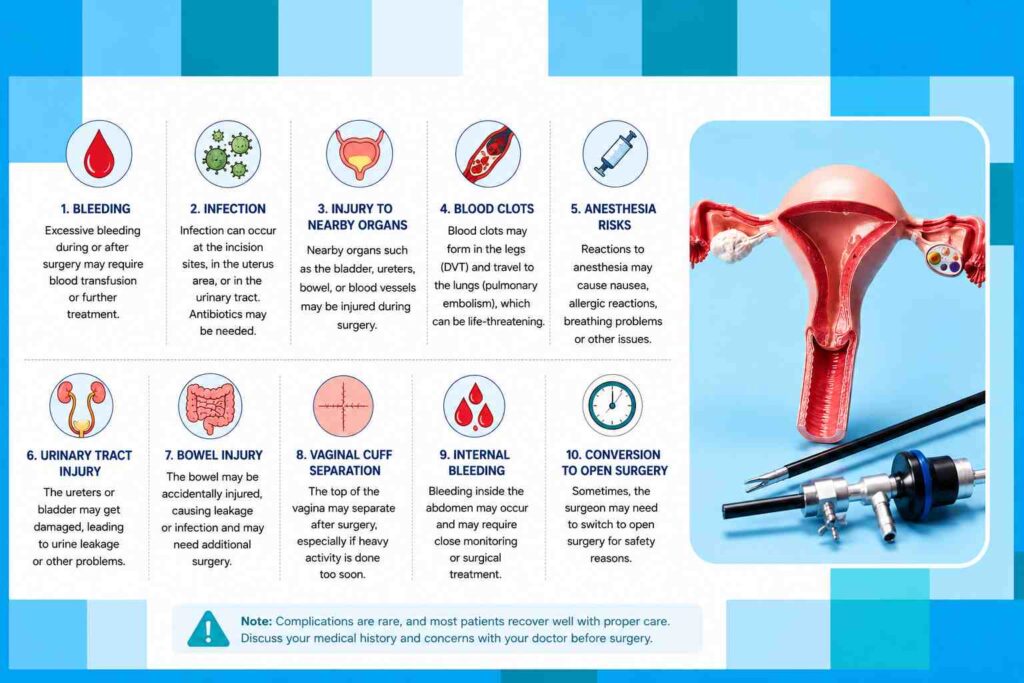
Damage to the Urinary TractBleeding
Bleeding is one of the most common surgical risks. Minor bleeding is expected during surgery, but excessive bleeding may occasionally require blood transfusion or additional surgical intervention.
Infection
Infections may occur at:
- Surgical incision sites
- Urinary tract
- Pelvic region
- Vaginal cuff
Proper wound care and prescribed antibiotics significantly reduce infection risk.
Injury to Nearby Organs
Since the uterus is located close to other pelvic organs, accidental injury may affect:
- Bladder
- Ureters
- Bowel
- Blood vessels
These injuries are uncommon but may require immediate repair.
Blood Clots
Some patients develop blood clots in the legs after surgery. If untreated, these clots may travel to the lungs and become a medical emergency.
Risk factors include:
- Smoking
- Obesity
- Prolonged bed rest
- Previous clotting
Anesthesia-Related Risks
General anesthesia is generally safe but may occasionally cause:
- Nausea
- Vomiting
- Allergic reactions
- Breathing difficulties
- Temporary confusion
These complications are usually monitored and treated promptly.
Less Common Complications
Although uncommon, patients should also be aware of less frequent Risks and Complications of Laparoscopic Hysterectomy.
Damage to the Urinary Tract
The ureters may occasionally be injured during surgery, especially in complex procedures involving severe endometriosis or previous pelvic surgeries.
Bowel Injury
Rare bowel injuries may not become obvious immediately after surgery. Early diagnosis is essential to prevent serious infection.
Vaginal Cuff Separation
After the uterus is removed, the upper portion of the vagina is closed. Rarely, this closure may reopen during recovery.
Internal Bleeding
Bleeding inside the abdomen may require emergency treatment if significant blood loss occurs.
Factors That Increase Surgical Risk
Certain conditions may increase the likelihood of complications.
These include:
- Diabetes
- High blood pressure
- Heart disease
- Obesity
- Smoking
- Previous abdominal surgery
- Severe endometriosis
- Large fibroids
- Bleeding disorders
- Advanced age
Managing these conditions before surgery helps improve outcomes.
Symptoms That Require Immediate Medical Attention
Patients should contact their healthcare provider immediately if they experience:
- Heavy vaginal bleeding
- Severe abdominal pain
- Persistent fever
- Chills
- Difficulty urinating
- Foul-smelling vaginal discharge
- Persistent vomiting
- Chest pain
- Shortness of breath
- Swelling in one leg
Early treatment often prevents more serious complications.
How Risks Are Reduced Before Surgery
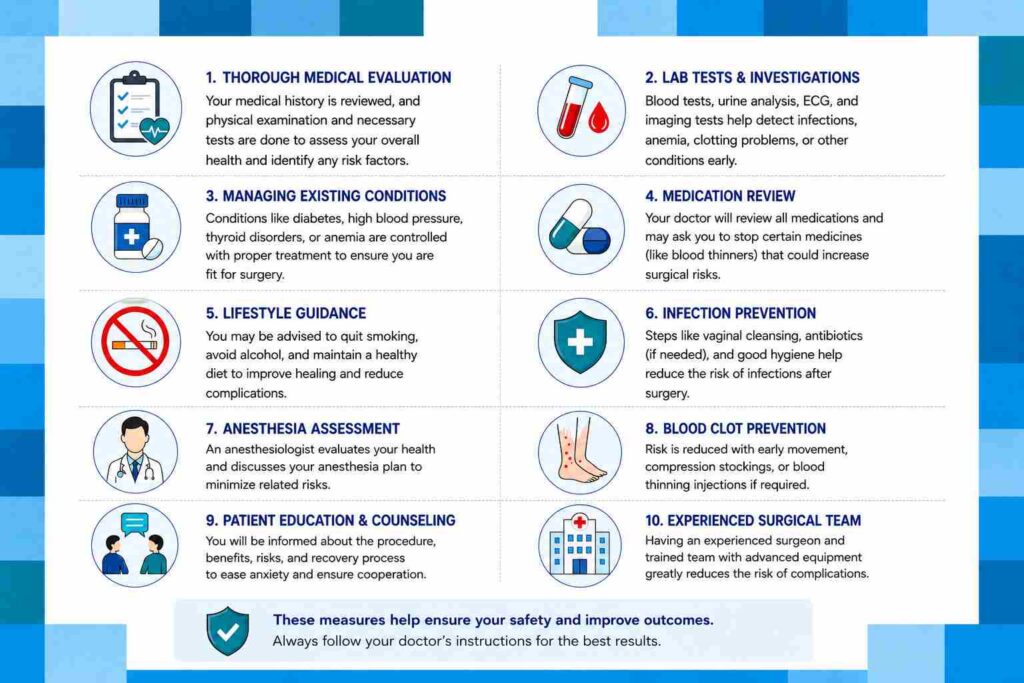
Healthcare providers carefully evaluate patients before surgery through:
- Physical examination
- Blood tests
- Imaging studies
- Medical history review
- Medication assessment
- Cardiac evaluation when necessary
Patients may also receive instructions regarding:
- Fasting before surgery
- Medication adjustments
- Smoking cessation
- Weight management
- Blood sugar control
These steps reduce the Risks and Complications of Laparoscopic Hysterectomy and improve recovery outcomes.
How Complications Are Diagnosed
If a complication is suspected after surgery, your healthcare provider may recommend one or more diagnostic tests to identify the problem accurately.
Common diagnostic methods include:
- Physical examination
- Blood tests
- Urine analysis
- Ultrasound scan
- CT scan
- MRI scan (in selected cases)
- Cystoscopy to examine the bladder
- Colon evaluation if bowel injury is suspected
Early diagnosis allows prompt treatment and reduces the risk of more serious health problems.
Treatment for Risks and Complications of Laparoscopic Hysterectomy
Treatment depends on the type and severity of the complication.
Medications
Mild complications may be managed with medications such as:
- Antibiotics for infections
- Pain relievers
- Anti-inflammatory medicines
- Blood-thinning medications when appropriate
- Medicines to control nausea
Drainage Procedures
Fluid collections or abscesses may require drainage using image-guided techniques.
Additional Surgery
Some complications require another surgical procedure, including:
- Repair of bladder injury
- Repair of bowel injury
- Control of internal bleeding
- Removal of infected tissue
- Repair of the vaginal cuff
Fortunately, these situations are relatively uncommon.
Recovery After Laparoscopic Hysterectomy
Most women recover faster after laparoscopic surgery compared to open abdominal surgery.
Recovery generally includes:
- Walking within a few hours after surgery
- Gradually increasing daily activities
- Drinking plenty of fluids
- Eating a balanced diet
- Avoiding heavy lifting for several weeks
- Taking medications exactly as prescribed
- Attending follow-up appointments
Most patients return to normal daily activities within a few weeks, although complete healing may take longer.
Tips to Reduce the Risks and Complications of Laparoscopic Hysterectomy
Patients can actively reduce surgical risks by following medical advice before and after surgery.
Helpful tips include:
- Stop smoking before surgery.
- Maintain a healthy body weight.
- Keep diabetes under good control.
- Inform your surgeon about all medications and supplements.
- Follow fasting instructions carefully.
- Walk regularly after surgery to improve circulation.
- Stay hydrated.
- Eat nutritious foods to promote healing.
- Avoid strenuous exercise until permitted.
- Report unusual symptoms immediately.
These simple steps significantly lower the Risks and Complications of Laparoscopic Hysterectomy and support a smoother recovery.
Benefits of Laparoscopic Hysterectomy
Despite the possible risks, laparoscopic hysterectomy remains one of the preferred surgical options because it offers many advantages.
Benefits include:
- Smaller incisions
- Less postoperative pain
- Reduced blood loss
- Lower infection risk compared with open surgery
- Minimal scarring
- Faster recovery
- Shorter hospital stay
- Earlier return to work and routine activities
For appropriately selected patients, the benefits often outweigh the potential complications.
When to Contact Your Healthcare Provider
Seek immediate medical care if you notice:
- Fever above 38°C
- Severe pelvic pain
- Heavy vaginal bleeding
- Persistent vomiting
- Difficulty passing urine
- Redness or pus around the incision
- Shortness of breath
- Chest pain
- Sudden leg swelling
- Severe dizziness or fainting
Prompt evaluation can prevent complications from becoming more serious.
Conclusion
Understanding the Risks and Complications of Laparoscopic Hysterectomy helps patients prepare for surgery with realistic expectations. Although complications such as bleeding, infection, blood clots, or injury to nearby organs can occur, they are relatively uncommon when the procedure is performed with appropriate surgical planning and postoperative care. Following your healthcare provider’s instructions, attending follow-up visits, and recognizing warning signs early contribute to a safer recovery. If you are considering laparoscopic hysterectomy in Thrissur, discussing your medical history and individual risk factors with your healthcare provider is the best way to ensure informed decision-making and optimal outcomes. For reliable patient information about hysterectomy, visit the American College of Obstetricians and Gynecologists (ACOG) .
Frequently Asked Questions
What are the most common Risks and Complications of Laparoscopic Hysterectomy
The most common complications include bleeding, infection, blood clots, and injury to nearby organs.
Is laparoscopic hysterectomy safer than open surgery
In many cases, yes. It generally results in less pain, smaller scars, and faster recovery.
How long does recovery take
Most patients recover within 2–6 weeks, depending on their overall health and the extent of surgery.
Can complications occur after going home?
Yes. Some complications develop days or even weeks after surgery, making follow-up important.
How common is bladder injury
Bladder injury is uncommon but can occur, particularly in complex surgeries.
Can infection be prevented
Following wound care instructions, taking prescribed medications, and maintaining good hygiene reduce the risk.
When should I seek emergency medical attention
Seek immediate care for heavy bleeding, severe pain, chest pain, breathing difficulty, or high fever.
Does age increase surgical risk
Older age may increase risk, especially when combined with other medical conditions.
Can I exercise after surgery
Light walking is encouraged, but strenuous exercise should be avoided until approved by your healthcare provider.
Can blood clots be prevented
Early walking, hydration, and prescribed compression devices or medications help lower the risk.
Drs GEM Hospital, Thrissur
Drs GEM Hospital is a trusted healthcare centre in Thrissur known for comprehensive maternity care, advanced gynaecology services, and dedicated child health support. With more than four decades of medical service, the hospital focuses on safe pregnancy care, modern surgical procedures, and round-the-clock support for mothers and children.
The hospital provides patient-focused care supported by modern diagnostics, experienced healthcare professionals, and 24×7 essential medical services including laboratory, pharmacy, and ultrasound facilities.