
7 Powerful Benefits of Minimally Invasive Hysterectomy in Thrissur
Minimally Invasive Hysterectomy in Thrissur has become a preferred treatment option for women who require surgical removal of the uterus while aiming for a faster recovery and reduced discomfort. Compared to traditional open surgery, minimally invasive techniques use smaller incisions, resulting in less pain, minimal scarring, and a shorter hospital stay. These modern procedures are designed to help patients return to their daily routines sooner while maintaining high standards of surgical safety.
A hysterectomy may be recommended for several gynecological conditions when other treatment methods do not provide adequate relief. Understanding the procedure, its benefits, possible risks, and the recovery process can help patients make informed healthcare decisions with greater confidence.
What Is Minimally Invasive Hysterectomy
A minimally invasive hysterectomy is a surgical procedure performed through small incisions instead of one large abdominal incision. Specialized surgical instruments and advanced imaging technology allow surgeons to remove the uterus with improved precision.
Common minimally invasive approaches include:
- Laparoscopic hysterectomy
- Robotic-assisted hysterectomy
- Vaginal hysterectomy
- Laparoscopic-assisted vaginal hysterectomy (LAVH)
These techniques aim to minimize trauma to surrounding tissues while providing effective treatment for various uterine conditions.
Why Is a Minimally Invasive Hysterectomy Needed
A healthcare provider may recommend this surgery when symptoms become severe or significantly affect daily life.
Common reasons include:
- Large or symptomatic uterine fibroids
- Chronic abnormal uterine bleeding
- Adenomyosis
- Endometriosis
- Uterine prolapse
- Chronic pelvic pain
- Precancerous changes of the uterus or cervix
- Early-stage gynecological cancers in selected cases
The decision is based on medical history, examination findings, imaging studies, and individual treatment goals.
Types of Minimally Invasive Hysterectomy
Laparoscopic Hysterectomy
This technique uses a tiny camera called a laparoscope inserted through small abdominal incisions. Surgical instruments remove the uterus with minimal tissue damage.
Robotic-Assisted Hysterectomy
A robotic surgical platform provides enhanced visualization and instrument precision, particularly for complex surgical cases.
Vaginal Hysterectomy
The uterus is removed through the vagina without external abdominal incisions, often resulting in a quicker recovery.
Laparoscopic-Assisted Vaginal Hysterectomy (LAVH)
This combines laparoscopic guidance with vaginal removal of the uterus, allowing improved visualization during surgery.
Symptoms That May Indicate the Need for Surgery
Although surgery is not always the first treatment option, certain symptoms may suggest that further evaluation is necessary.
These include:
- Heavy menstrual bleeding
- Bleeding between menstrual cycles
- Persistent pelvic pain
- Pain during intercourse
- Frequent urination caused by pressure
- Pelvic heaviness
- Enlarged uterus
- Severe menstrual cramps
- Persistent anemia due to excessive blood loss
Persistent symptoms should always be evaluated by a qualified gynecologist.
7 Powerful Benefits of Minimally Invasive Hysterectomy
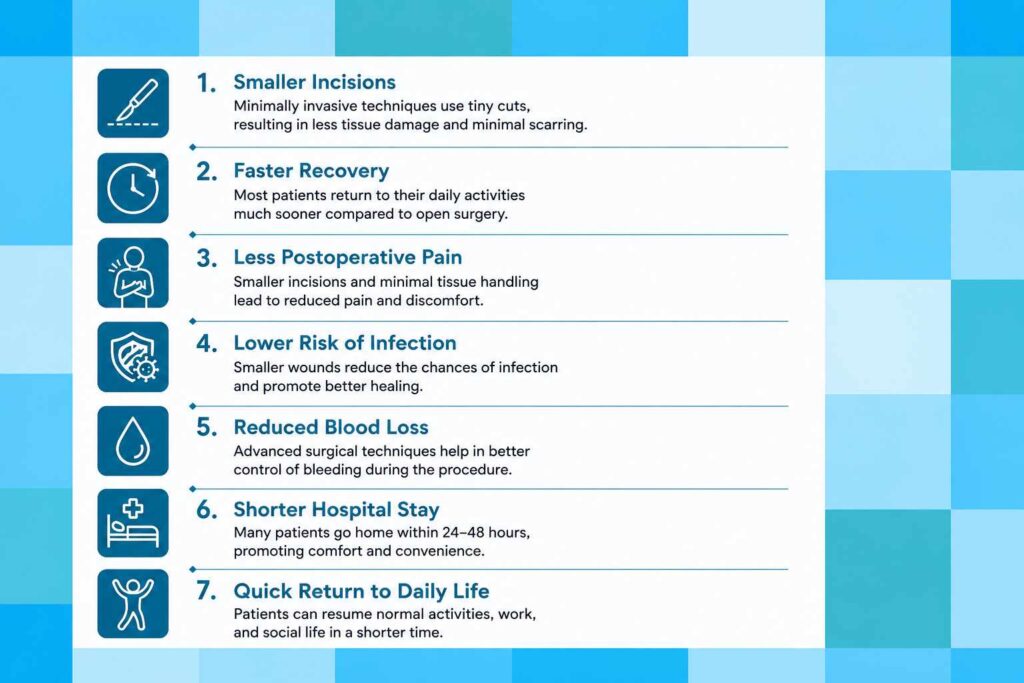
1. Smaller Surgical Incisions
Small incisions reduce tissue damage and usually produce less noticeable scars compared to open surgery.
2. Faster Recovery
Many patients resume light daily activities earlier than those undergoing traditional abdominal hysterectomy.
3. Less Postoperative Pain
Smaller incisions generally lead to reduced pain and decreased need for pain medication.
4. Lower Risk of Infection
Minimal exposure of internal tissues helps reduce the likelihood of postoperative wound infections.
5. Reduced Blood Loss
Modern minimally invasive surgical techniques are associated with improved bleeding control during surgery.
6. Shorter Hospital Stay
Many patients are discharged within one or two days depending on their overall health and surgical outcome.
7. Earlier Return to Daily Life
Patients often regain normal mobility and routine activities sooner than with conventional open surgery.
How Is Minimally Invasive Hysterectomy Performed
The procedure generally follows these steps:
- Preoperative evaluation
- Administration of general anesthesia
- Creation of small abdominal incisions (if laparoscopic or robotic)
- Insertion of specialized surgical instruments
- Careful separation of the uterus from surrounding structures
- Removal of the uterus through the vagina or small incision
- Closure of incisions
- Recovery room observation
The exact technique depends on the patient’s condition and the chosen surgical approach.
Preparing for Surgery
Preparation contributes to a smoother surgical experience.
Patients are commonly advised to:
- Complete recommended blood tests
- Undergo imaging studies if required
- Inform the healthcare team about current medications
- Stop certain medications only if instructed
- Avoid eating and drinking before surgery as directed
- Arrange transportation after discharge
- Prepare comfortable recovery space at home
Proper preparation also helps reduce anxiety before surgery.
Recovery After Minimally Invasive Hysterectomy
Recovery varies between individuals, but many patients experience gradual improvement over several weeks.
Recovery recommendations include:
- Walk short distances regularly
- Drink adequate fluids
- Eat nutritious meals
- Avoid lifting heavy objects
- Take prescribed medications as directed
- Attend follow-up appointments
- Monitor incision sites for healing
- Resume exercise only after medical approval
Most patients steadily regain energy while following postoperative instructions.
Possible Risks and Complications
Although minimally invasive procedures are considered safe, every surgery carries potential risks.
Possible complications include:
- Bleeding
- Infection
- Blood clots
- Injury to nearby organs
- Urinary complications
- Temporary bowel changes
- Adverse reaction to anesthesia
- Rare need to convert to open surgery
Careful surgical planning helps minimize these risks.
Tips for a Smooth Recovery After Minimally Invasive Hysterectomy
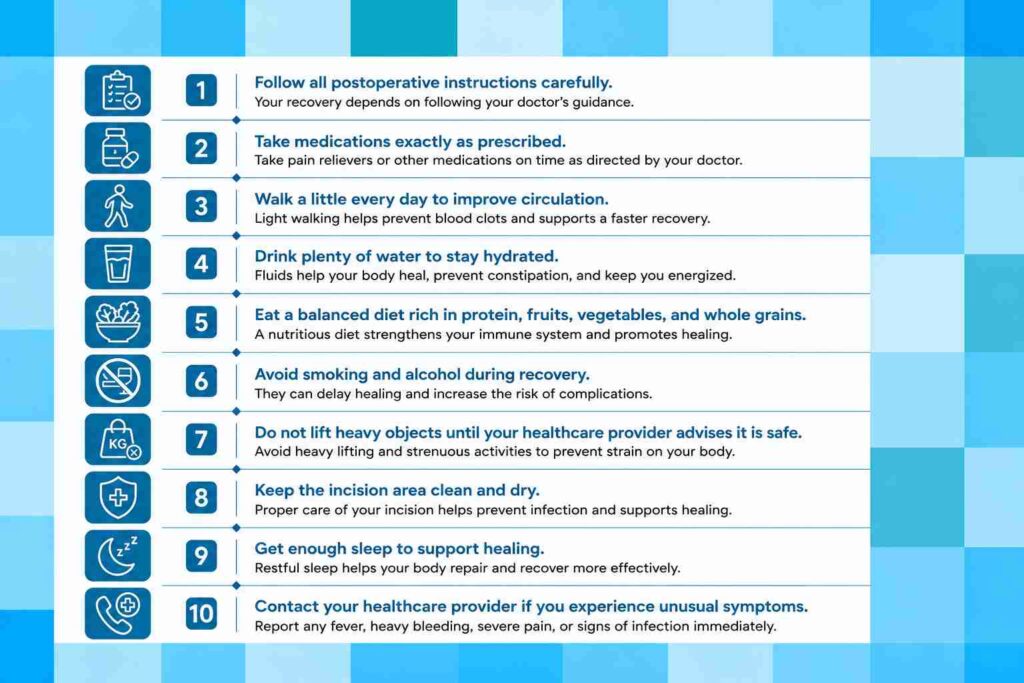
Recovering from surgery takes time, but following healthy habits can make the healing process easier and more comfortable.
Here are some practical recovery tips:
- Follow all postoperative instructions carefully.
- Take medications exactly as prescribed.
- Walk a little every day to improve circulation.
- Drink plenty of water to stay hydrated.
- Eat a balanced diet rich in protein, fruits, vegetables, and whole grains.
- Avoid smoking and alcohol during recovery.
- Do not lift heavy objects until your healthcare provider advises it is safe.
- Keep the incision area clean and dry.
- Get enough sleep to support healing.
- Contact your healthcare provider if you experience unusual symptoms.
Small lifestyle changes during recovery can contribute to better healing and reduce the risk of complications.
When Should You Contact a Healthcare Provider
While most patients recover without major issues, certain symptoms require prompt medical attention.
Seek medical advice if you experience:
- Heavy vaginal bleeding
- Fever or chills
- Severe abdominal pain
- Persistent nausea or vomiting
- Difficulty passing urine
- Foul-smelling vaginal discharge
- Redness, swelling, or pus around the incision
- Shortness of breath
- Chest pain
- Swelling or pain in one leg
Early medical evaluation helps prevent complications and supports a safer recovery.
Lifestyle After Minimally Invasive Hysterectomy
After recovery, many women notice a significant improvement in their quality of life, particularly if surgery was performed to relieve chronic symptoms.
Healthy habits that support long-term well-being include:
- Maintaining a healthy body weight
- Eating a nutritious, balanced diet
- Staying physically active
- Managing stress effectively
- Attending regular gynecological check-ups
- Getting adequate calcium and vitamin D when appropriate
- Following medical advice regarding hormone-related concerns if the ovaries were removed
These habits can help maintain overall health after surgery.
Who May Be a Good Candidate for Minimally Invasive Hysterectomy
Not every patient requires the same surgical approach. A minimally invasive procedure may be considered based on several individual factors.
Suitable candidates often include women who have:
- Symptomatic uterine fibroids
- Adenomyosis
- Endometriosis
- Persistent abnormal uterine bleeding
- Uterine prolapse
- Chronic pelvic pain that has not improved with other treatments
- Early-stage gynecological conditions requiring hysterectomy
The final decision depends on medical evaluation, overall health, previous surgeries, and the underlying condition.
Open Hysterectomy vs. Minimally Invasive Hysterectomy
| Feature | Minimally Invasive Hysterectomy | Open Hysterectomy |
|---|---|---|
| Incision Size | Small | Large |
| Blood Loss | Usually less | Usually more |
| Pain | Generally less | Usually greater |
| Hospital Stay | Shorter | Longer |
| Recovery Time | Faster | Slower |
| Scarring | Minimal | More noticeable |
| Infection Risk | Lower in many cases | Relatively higher |
The most appropriate surgical approach depends on individual medical needs rather than personal preference alone.
Conclusion
Choosing Minimally Invasive Hysterectomy in Thrissur may provide several advantages, including smaller incisions, reduced postoperative discomfort, quicker recovery, and shorter hospital stays. However, every patient is unique, and the most appropriate treatment depends on a thorough medical evaluation, diagnosis, and discussion with a qualified gynecological surgeon. Understanding the procedure, preparing properly, and following postoperative instructions can contribute to a smoother recovery and better long-term outcomes for women seeking relief from uterine conditions. To learn more about hysterectomy and women’s reproductive health, refer to the Mayo Clinic Hysterectomy Guide.
Frequently Asked Questions
What is a minimally invasive hysterectomy
It is a surgical procedure that removes the uterus using small incisions instead of a large abdominal cut, leading to faster recovery and less postoperative discomfort.
How long does the surgery usually take
The procedure typically takes between one and three hours, depending on the surgical technique and individual case complexity.
Is minimally invasive hysterectomy painful
Patients usually experience less pain than with traditional open surgery, and pain is managed using prescribed medications.
How long is the recovery period
Most women recover within two to six weeks, although complete healing varies from person to person.
Will there be visible scars
The incisions are small, so any scars are generally minimal and tend to fade over time.
Can I return to work quickly
Many patients can resume office-based work within a few weeks, depending on the type of work and their recovery progress.
Is the procedure safe
Yes. When performed by an experienced surgical team for appropriate candidates, minimally invasive hysterectomy is considered a safe and effective procedure.
Will I still have menstrual periods
No. Since the uterus is removed, menstrual periods permanently stop after a hysterectomy.
Are the ovaries always removed during surgery
No. The ovaries may be preserved or removed depending on the patient’s age, diagnosis, and treatment plan.
What are the main advantages over open surgery
Smaller incisions, less pain, lower blood loss, reduced scarring, shorter hospital stay, and quicker recovery are among the primary benefits.
Drs GEM Hospital, Thrissur
Drs GEM Hospital is a trusted healthcare centre in Thrissur known for comprehensive maternity care, advanced gynaecology services, and dedicated child health support. With more than four decades of medical service, the hospital focuses on safe pregnancy care, modern surgical procedures, and round-the-clock support for mothers and children.
The hospital provides patient-focused care supported by modern diagnostics, experienced healthcare professionals, and 24×7 essential medical services including laboratory, pharmacy, and ultrasound facilities.