
9 Powerful Insights Into Laparoscopic Hysterectomy Procedure
The Laparoscopic Hysterectomy Procedure is one of the most advanced surgical techniques used to remove the uterus through small incisions instead of a large abdominal cut. This minimally invasive approach has transformed modern gynaecological surgery by offering faster recovery, reduced pain, and shorter hospital stays. Women seeking treatment for uterine fibroids, abnormal bleeding, endometriosis, prolapse, or certain cancers often benefit from the Laparoscopic Hysterectomy Procedure. At leading hospitals in Thrissur, this procedure is commonly performed using advanced laparoscopic technology to improve patient outcomes.
Understanding the Laparoscopic Hysterectomy Procedure can help patients feel more confident and prepared before surgery. This guide explains everything from indications and types to recovery and long-term outcomes.
What Is a Laparoscopic Hysterectomy Procedure?
A Laparoscopic Hysterectomy Procedure is a minimally invasive surgery used to remove the uterus with the help of a laparoscope, a thin tube equipped with a camera and light source.
Unlike traditional open surgery, the Laparoscopic Hysterectomy Procedure requires only a few small incisions through which specialised instruments are inserted. The camera provides a magnified view of the pelvic organs, allowing surgeons to perform the operation with precision.
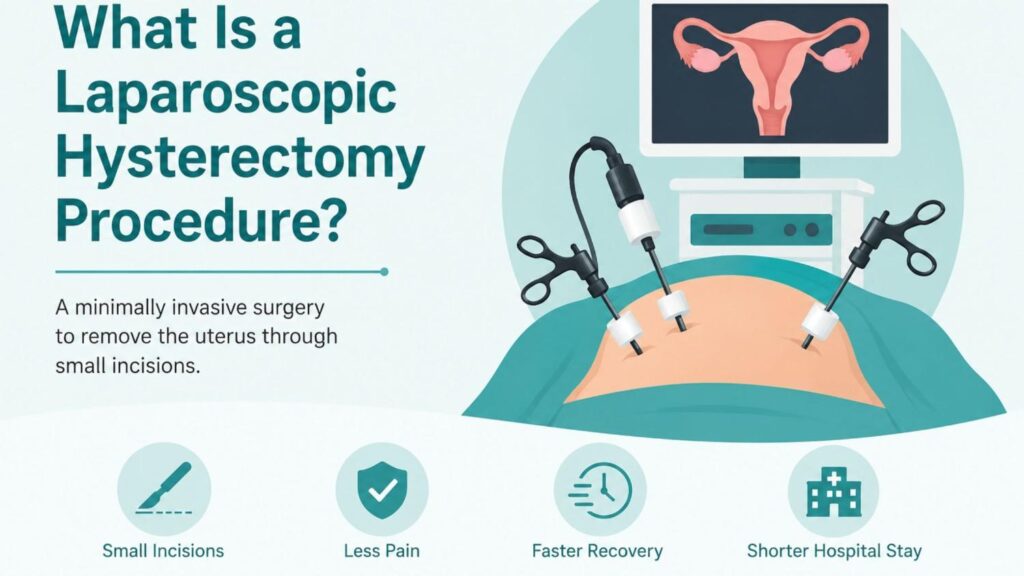
Key Features
- Small abdominal incisions
- High-definition camera guidance
- Reduced blood loss
- Less post-operative discomfort
- Faster recovery compared to open surgery
- Minimal scarring
Why Is a Laparoscopic Hysterectomy Procedure Performed?
Doctors may recommend a Laparoscopic Hysterectomy Procedure when non-surgical treatments fail to provide adequate relief.
Uterine Fibroids
Large or symptomatic fibroids can cause heavy menstrual bleeding, pelvic pressure, and pain.
Gynaecological Cancers and Adenomyosis
Certain early-stage uterine and cervical cancers may be treated using a Laparoscopic Hysterectomy Procedure.
Endometriosis
Severe endometriosis may lead to chronic pelvic pain and reduced quality of life.
Uterine Prolapse
Weak pelvic floor muscles can cause the uterus to descend into the vaginal canal.
Types of Laparoscopic Hysterectomy Procedure
Different patients require different surgical approaches.
Total Laparoscopic Hysterectomy (TLH)
The uterus and cervix are completely removed using laparoscopic techniques.
Laparoscopic Supracervical Hysterectomy
The uterus is removed while the cervix remains intact.
Laparoscopic-Assisted Vaginal Hysterectomy (LAVH)
The laparoscope assists the procedure while the uterus is removed through the vagina.
Radical Laparoscopic Hysterectomy
A more extensive operation often performed for specific cancer cases.
Step-by-Step Laparoscopic Hysterectomy Procedure
Understanding the Laparoscopic Hysterectomy Procedure helps reduce anxiety and improves preparation.
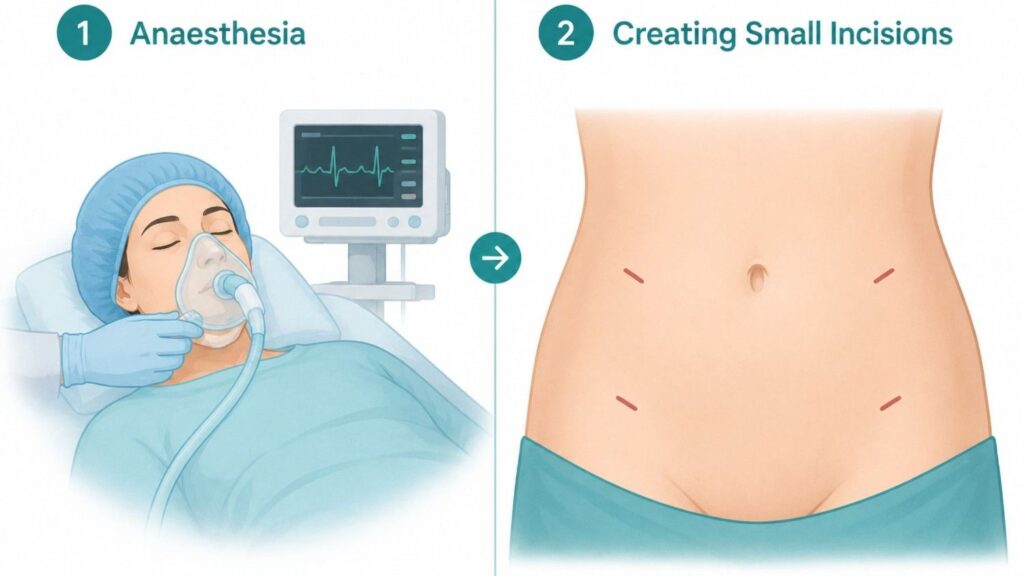
Step 1: Anaesthesia and Creating Small Incisions
- General anaesthesia is administered to ensure the patient remains comfortable and pain-free.
- Three to four tiny incisions are made in the abdomen.
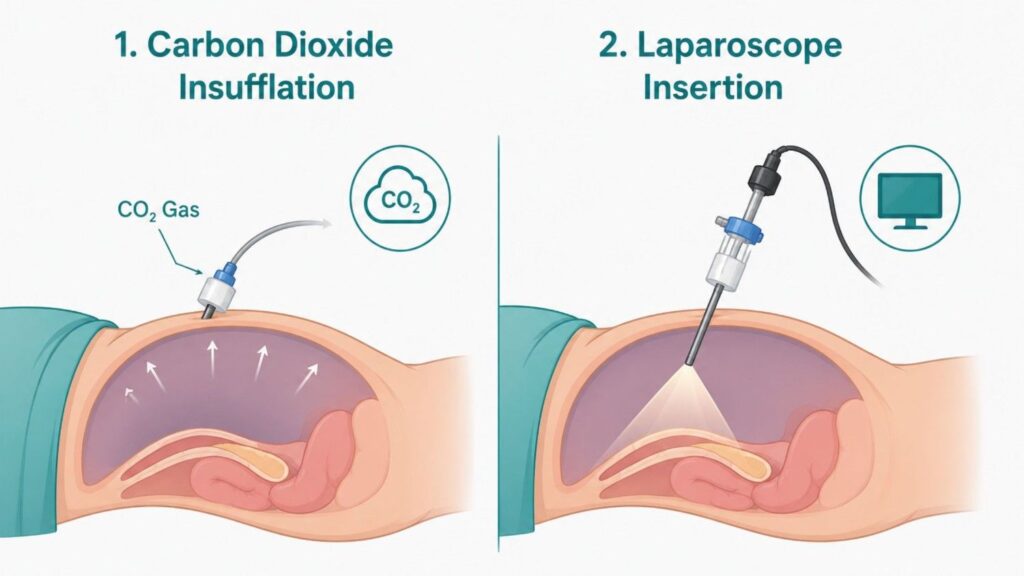
Step 2: Carbon Dioxide Insufflation
- The abdomen is gently inflated using carbon dioxide gas to improve visibility.
Step 3: Laparoscope Insertion
- A high-definition camera is inserted through one incision.
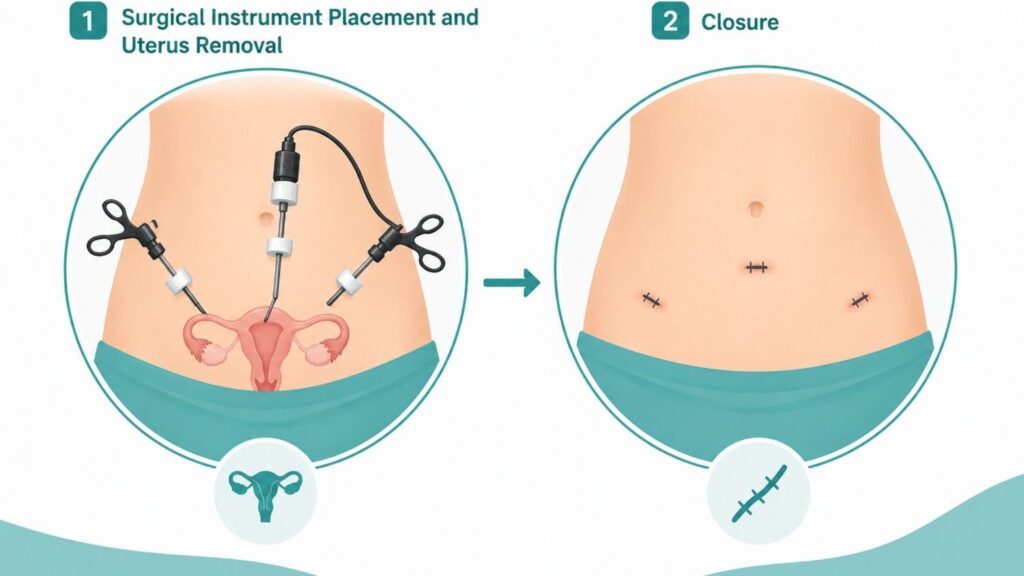
Step 4: Surgical Instrument Placement
- Specialised instruments are introduced through the remaining ports.
Step 5: Uterus Removal
- The uterus is carefully separated from surrounding tissues and removed.
Step 6: Closure
- The small incisions are closed with stitches or surgical adhesive.
Benefits of Laparoscopic Hysterectomy Procedure
The Laparoscopic Hysterectomy Procedure offers several advantages over traditional open surgery.
- Smaller Incisions
Tiny cuts reduce visible scarring.
- Reduced Pain
Patients typically experience less post-operative discomfort.
- Faster Recovery
Recovery is generally quicker than abdominal hysterectomy.
- Shorter Hospital Stay
Most patients return home within one or two days.
- Lower Blood Loss
The minimally invasive approach reduces surgical bleeding.
- Lower Infection Risk
Smaller wounds decrease the likelihood of infection.
- Better Cosmetic Results
Minimal scarring often improves patient satisfaction.
- Earlier Return to Daily Activities
Many women resume normal routines within a few weeks.
Preparing for a Laparoscopic Hysterectomy Procedure
Proper preparation contributes to successful outcomes.
Medical Evaluation
Your doctor may recommend:
- Blood tests
- Ultrasound scans
- MRI scans if required
- ECG for selected patients
Medication Review
Inform your surgeon about:
- Blood thinners
- Herbal supplements
- Prescription medications
Fasting Instructions
Patients are usually asked to avoid food and drinks for several hours before surgery.
Home Arrangements
Plan for transportation and assistance during the initial recovery period.
Risks and Possible Complications
Although the Laparoscopic Hysterectomy Procedure is considered safe, every surgery carries some risks.
Potential Risks
- Bleeding
- Infection
- Injury to nearby organs
- Blood clots
- Anaesthesia-related complications
- Temporary shoulder pain from surgical gas
- Conversion to open surgery in rare situations
Most complications are uncommon when performed by experienced surgeons.
Life After a Laparoscopic Hysterectomy Procedure
Many women report improved quality of life after surgery.
What Changes Can Be Expected?
- Menstrual periods stop permanently
- Pregnancy is no longer possible
- Pelvic pain may improve significantly
- Heavy bleeding is eliminated
- Daily activities often become easier
Emotional Adjustment
Some women may require time to adapt emotionally after uterus removal. Support from healthcare professionals and family members can be valuable.
Who Is an Ideal Candidate?
You may be considered a suitable candidate if you:
- Have completed your family
- Experience severe symptoms from uterine conditions
- Have failed conservative treatment options
- Are medically fit for surgery
- Have conditions requiring definitive treatment
Your gynaecologist will determine whether the Laparoscopic Hysterectomy Procedure is appropriate for your specific situation.
When to Contact Your Doctor After Surgery
Seek medical attention if you experience:
- Fever above 38°C
- Severe abdominal pain
- Heavy vaginal bleeding
- Persistent nausea or vomiting
- Difficulty urinating
- Redness or discharge from incision sites
Early evaluation helps prevent complications.
Conclusion
The Laparoscopic Hysterectomy Procedure has become a preferred surgical option for many women because of its minimally invasive nature, faster healing, reduced pain, and improved recovery experience. Whether performed for fibroids, endometriosis, abnormal bleeding, prolapse, or selected cancers, the Laparoscopic Hysterectomy Procedure provides effective long-term relief while allowing patients to return to normal life sooner. Women considering treatment should discuss their individual condition and expectations with an experienced gynaecologist to determine whether the Laparoscopic Hysterectomy Procedure is the right choice. Patients seeking expert women’s healthcare in Thrissur can benefit from personalised evaluation and modern surgical techniques designed to support safe recovery and long-term wellbeing.
According to the American College of Obstetricians and Gynecologists (ACOG), laparoscopic and minimally invasive approaches to hysterectomy are recommended over open abdominal surgery whenever clinically appropriate, owing to their superior recovery profiles and reduced complication rates.