
7 Powerful Facts About Hysterectomy Surgery in Thrissur Today
Hysterectomy Surgery in Thrissur is a common gynecological procedure performed to treat several conditions affecting the uterus. Women may need this surgery when other treatment options no longer provide relief or when a medical condition significantly affects daily life. The procedure is carefully planned after a complete medical evaluation, and modern surgical techniques have made it safer, less invasive, and associated with faster recovery.
A hysterectomy involves removing the uterus. Depending on the medical condition, surgeons may also remove the cervix, fallopian tubes, or ovaries. The type of surgery recommended depends on factors such as age, overall health, symptoms, and the underlying condition. Understanding the procedure helps patients make informed decisions and prepare for recovery with confidence.
What Is Hysterectomy Surgery
A hysterectomy is a surgical procedure performed to remove the uterus. After surgery, menstrual periods stop permanently, and pregnancy is no longer possible.
The procedure may be recommended when medications or minimally invasive treatments do not adequately control symptoms.
The main goals of hysterectomy surgery are to:
- Relieve chronic pelvic pain
- Stop heavy or prolonged bleeding
- Treat large uterine fibroids
- Manage severe endometriosis
- Remove cancerous or precancerous tissue
- Improve overall quality of life
Modern gynecological surgery focuses on patient safety, reduced discomfort, and quicker recovery whenever possible.
Why Is Hysterectomy Surgery Needed
A hysterectomy is generally considered only after careful evaluation and when other treatments are unlikely to provide lasting results.
Common medical reasons include:
Uterine Fibroids
Fibroids are non-cancerous growths that develop within the uterus. Large fibroids may cause:
- Heavy menstrual bleeding
- Pelvic pressure
- Frequent urination
- Pain during daily activities
- Lower back discomfort
When symptoms become severe, surgery may offer permanent relief.
Endometriosis
Endometriosis occurs when tissue similar to the uterine lining grows outside the uterus. It may lead to:
- Severe menstrual pain
- Chronic pelvic pain
- Pain during intercourse
- Fertility problems
In selected cases, hysterectomy may be recommended after other treatments have failed.
Adenomyosis
Adenomyosis develops when the uterine lining grows into the muscular wall of the uterus.
Symptoms often include:
- Painful periods
- Heavy bleeding
- Enlarged uterus
- Persistent pelvic discomfort
Removing the uterus can permanently resolve symptoms.
Uterine Prolapse
Weak pelvic muscles may allow the uterus to descend into the vaginal canal.
Common symptoms include:
- Feeling of pressure
- Difficulty walking comfortably
- Urinary leakage
- Vaginal bulging
Surgery restores comfort and improves daily functioning.
Gynecological Cancer
A hysterectomy may be part of treatment for cancers involving:
- Uterus
- Cervix
- Ovaries
- Endometrium
The exact surgical approach depends on the stage and type of cancer.
Types of Hysterectomy Surgery
Different procedures are available depending on the medical condition.
Total Hysterectomy
This is the most commonly performed procedure.
It removes:
- Uterus
- Cervix
This option is recommended for many benign and malignant conditions.
Partial (Subtotal) Hysterectomy
In this procedure:
- The uterus is removed.
- The cervix is preserved.
This approach may be appropriate in selected patients.
Radical Hysterectomy
A radical hysterectomy is usually performed for certain cancers.
It removes:
- Uterus
- Cervix
- Upper portion of the vagina
- Nearby tissues
- Sometimes lymph nodes
This is a more extensive operation.
Hysterectomy with Bilateral Salpingo-Oophorectomy
This procedure removes:
- Uterus
- Cervix (when indicated)
- Both ovaries
- Both fallopian tubes
It may be recommended for certain cancers or women at high genetic risk.
Hysterectomy with Bilateral Salpingo-Oophorectomy
This procedure removes:
- Uterus
- Cervix (when indicated)
- Both ovaries
- Both fallopian tubes
It may be recommended for certain cancers or women at high genetic risk.
Vaginal Hysterectomy
The uterus is removed through the vagina without external abdominal incisions.
Benefits include:
- Less postoperative pain
- Faster healing
- Shorter hospital stay
- Minimal visible scarring
Laparoscopic Hysterectomy
Laparoscopic surgery uses small incisions and specialized instruments.
Benefits include:
- Smaller scars
- Reduced blood loss
- Less postoperative discomfort
- Faster recovery
- Earlier return to daily activities
Robotic-Assisted Hysterectomy
Robotic technology enhances surgical precision during minimally invasive procedures.
Potential advantages include:
- High precision
- Better visualization
- Smaller incisions
- Improved surgical control
- Reduced recovery time
Symptoms That May Indicate the Need for Surgery
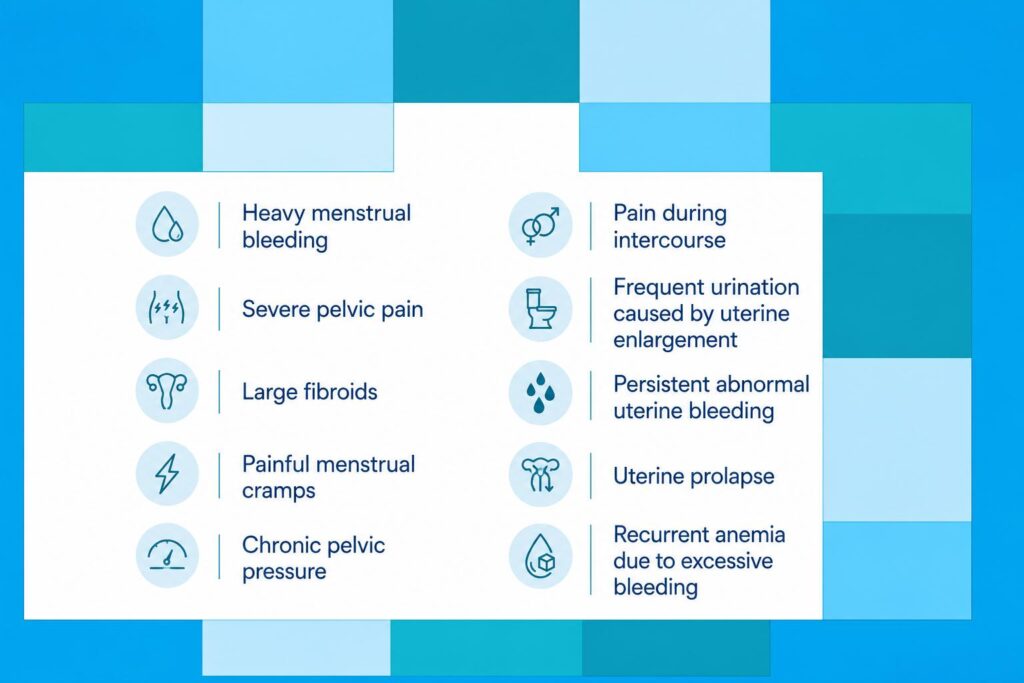
Not every symptom requires surgery, but persistent problems should be evaluated.
Common symptoms include:
- Heavy menstrual bleeding
- Severe pelvic pain
- Large fibroids
- Painful menstrual cramps
- Chronic pelvic pressure
- Pain during intercourse
- Frequent urination caused by uterine enlargement
- Persistent abnormal uterine bleeding
- Uterine prolapse
- Recurrent anemia due to excessive bleeding
Medical evaluation helps determine whether surgery or another treatment is the most appropriate option.
Benefits of Hysterectomy Surgery
When recommended for the right medical reasons, hysterectomy offers several long-term benefits.
Permanent Relief from Heavy Bleeding
Women experiencing excessive menstrual bleeding often experience complete resolution after surgery.
Reduced Chronic Pelvic Pain
Conditions such as adenomyosis, fibroids, and severe endometriosis can improve significantly.
Better Quality of Life
Many women report improvements in:
- Daily comfort
- Sleep quality
- Physical activity
- Emotional well-being
- Workplace productivity
Elimination of Fibroid-Related Symptoms
Large fibroids can cause:
- Pelvic pressure
- Frequent urination
- Constipation
- Abdominal fullness
Removing the uterus permanently eliminates uterine fibroids.
Reduced Risk of Certain Diseases
Depending on the procedure, removal of the uterus, fallopian tubes, or ovaries may reduce the risk of recurrence or progression of specific gynecological conditions.
Preparing for Hysterectomy Surgery
Proper preparation can help improve the surgical experience and support a smoother recovery. Your healthcare provider will explain the procedure, expected outcomes, and any specific instructions based on your medical condition.
Medical Evaluation
Before surgery, you may undergo:
- Physical examination
- Pelvic examination
- Blood tests
- Urine analysis
- ECG, if required
- Imaging tests such as ultrasound or MRI
These investigations help determine the safest surgical approach.
Medication Review
Tell your healthcare provider about:
- Prescription medicines
- Over-the-counter medications
- Herbal supplements
- Blood-thinning medicines
- Any allergies
Some medications may need to be stopped temporarily before surgery.
Preoperative Instructions
Patients are usually advised to:
- Avoid eating or drinking for several hours before surgery.
- Arrange transportation after hospital discharge.
- Pack comfortable clothing for the hospital stay.
- Follow all instructions regarding medications and personal hygiene.
Being well prepared helps reduce stress and supports a smoother surgical process.
How Hysterectomy Surgery Is Performed
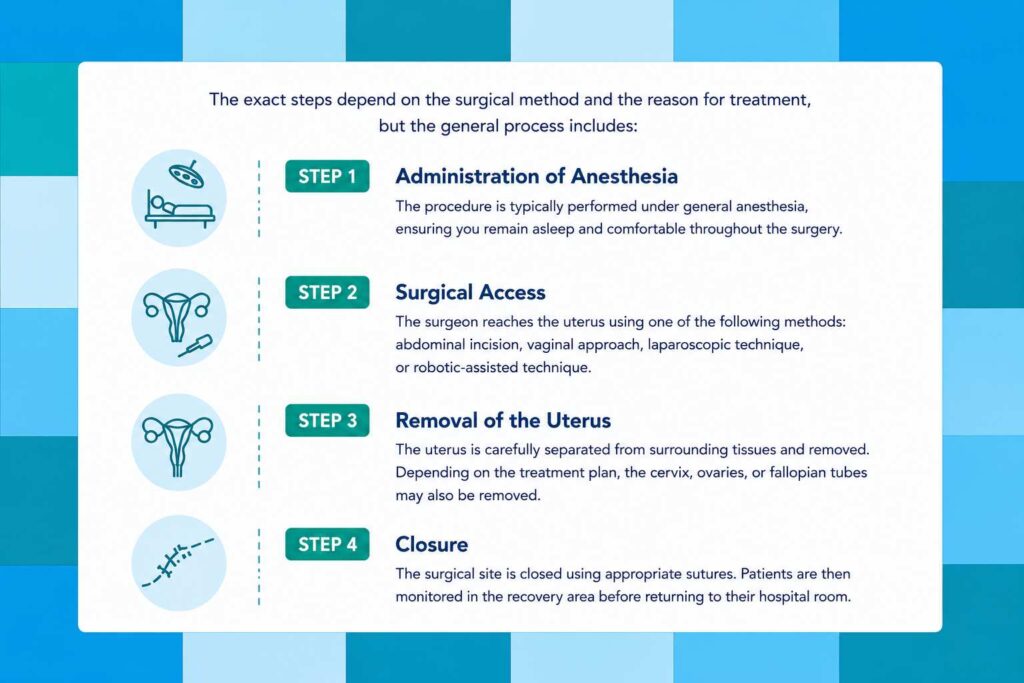
The exact steps depend on the surgical method and the reason for treatment, but the general process includes:
Step 1: Administration of Anesthesia
The procedure is typically performed under general anesthesia, ensuring you remain asleep and comfortable throughout the surgery.
Step 2: Surgical Access
The surgeon reaches the uterus using one of the following methods:
- Abdominal incision
- Vaginal approach
- Laparoscopic technique
- Robotic-assisted technique
Step 3: Removal of the Uterus
The uterus is carefully separated from surrounding tissues and removed. Depending on the treatment plan, the cervix, ovaries, or fallopian tubes may also be removed.
Step 4: Closure
The surgical site is closed using appropriate sutures. Patients are then monitored in the recovery area before returning to their hospital room.
Recovery After Hysterectomy Surgery
Recovery varies depending on the type of surgery performed and the individual’s overall health.
Hospital Stay
Typical hospital stays include:
- Laparoscopic surgery: 1–2 days
- Vaginal surgery: 1–2 days
- Abdominal surgery: 2–4 days
Your healthcare team will determine the appropriate discharge time based on your recovery.
First Few Weeks
During recovery, it is common to experience:
- Mild pain or discomfort
- Fatigue
- Light vaginal spotting
- Reduced activity levels
These symptoms usually improve gradually with proper care.
Returning to Daily Activities
Most patients can slowly resume normal activities according to their surgeon’s advice.
Recovery often includes:
- Gentle walking
- Adequate hydration
- Balanced nutrition
- Avoiding heavy lifting
- Taking prescribed medications as directed
Complete healing may take several weeks, depending on the surgical technique used.
Possible Risks and Complications
Like any surgical procedure, hysterectomy carries certain risks, although serious complications are uncommon when performed by experienced surgical teams.
Potential risks include:
- Infection
- Bleeding
- Blood clots
- Injury to nearby organs
- Temporary bladder or bowel problems
- Reactions to anesthesia
- Delayed wound healing
Following postoperative instructions significantly reduces the likelihood of complications.
Tips for a Smooth Recovery
A healthy recovery involves following your healthcare provider’s recommendations and allowing your body sufficient time to heal.
Helpful tips include:
- Get adequate rest.
- Walk short distances daily.
- Drink plenty of water.
- Eat protein-rich and fiber-rich foods.
- Avoid smoking and alcohol.
- Prevent constipation with a healthy diet.
- Attend all follow-up appointments.
- Avoid strenuous exercise until medically cleared.
- Do not lift heavy objects.
- Report unusual symptoms immediately.
Life After Hysterectomy Surgery
Many women experience a significant improvement in their quality of life after recovery.
Common benefits include:
- No more menstrual bleeding
- Relief from chronic pelvic pain
- Reduced pelvic pressure
- Improved energy levels
- Better sleep
- Increased comfort during daily activities
If the ovaries are removed, hormonal changes may occur. Your healthcare provider will discuss appropriate management options if needed.
When Should You Seek Medical Attention
Contact your healthcare provider promptly if you experience:
- Heavy vaginal bleeding
- Fever
- Severe abdominal pain
- Increasing redness around the incision
- Pus or foul-smelling discharge
- Difficulty passing urine
- Chest pain
- Shortness of breath
- Persistent vomiting
- Severe swelling in the legs
Early medical evaluation helps prevent complications.
Conclusion
Hysterectomy Surgery in Thrissur is an established treatment for several uterine conditions when conservative treatments are no longer effective. Understanding the different surgical options, potential benefits, recovery process, and possible risks helps patients make informed healthcare decisions. With modern surgical techniques, individualized treatment planning, and appropriate postoperative care, many women achieve lasting symptom relief and an improved quality of life. If you are experiencing persistent gynecological symptoms, consult a qualified gynecologist for a thorough evaluation and guidance on the most suitable treatment approach. For more information about hysterectomy procedures, benefits, risks, and recovery, visit the American College of Obstetricians and Gynecologist .
Frequently Asked Questions
What is hysterectomy surgery
It is a surgical procedure to remove the uterus to treat certain gynecological conditions.
Who may need a hysterectomy
Women with severe fibroids, adenomyosis, endometriosis, uterine prolapse, abnormal bleeding, or certain cancers may require this surgery.
Is hysterectomy a major surgery
Yes. It is considered a major surgical procedure, although minimally invasive techniques have reduced recovery time for many patients.
How long does recovery take
Recovery depends on the surgical method. Minimally invasive procedures generally have a shorter recovery than abdominal surgery.
Will menstrual periods stop after surgery
Yes. Once the uterus is removed, menstrual periods stop permanently.
Can pregnancy occur after a hysterectomy
No. Pregnancy is not possible after the uterus has been removed.
Is laparoscopic hysterectomy safe
For appropriately selected patients, laparoscopic surgery is considered a safe and effective minimally invasive option.
Will I have visible scars
Laparoscopic surgery usually leaves only very small scars, while abdominal surgery results in a larger incision scar.
When can I return to work
The timeline varies depending on the type of surgery, the nature of your work, and your individual recovery. Always follow your surgeon’s advice.
Are there alternatives to hysterectomy
Yes. Depending on the condition, medications, hormonal therapy, minimally invasive procedures, or other surgeries may be considered before recommending hysterectomy.
Drs GEM Hospital, Thrissur
Drs GEM Hospital is a trusted healthcare centre in Thrissur known for comprehensive maternity care, advanced gynaecology services, and dedicated child health support. With more than four decades of medical service, the hospital focuses on safe pregnancy care, modern surgical procedures, and round-the-clock support for mothers and children.
The hospital provides patient-focused care supported by modern diagnostics, experienced healthcare professionals, and 24×7 essential medical services including laboratory, pharmacy, and ultrasound facilities.